If you have been looking into ways to protect your car’s paint, you have probably come across ceramic and graphene coatings.
At first, they can sound almost identical. Both are designed to protect the paint, improve the finish and make the car easier to keep clean. So, what actually separates them?
The answer is not as simple as saying one is always better.
The coating itself matters, but so do the condition of your paint, how you use your car and how well you look after it afterwards.
What Is Ceramic Coating?
Ceramic coating is a liquid coating applied to a vehicle’s paint. After it cures, it forms a protective layer over the surface.
Many automotive ceramic coatings use silicon dioxide, or SiO₂, as part of their formulation.
One of the things owners usually notice is how water behaves after the coating is applied. Instead of sitting flat on the paint, water can bead up and run off more easily.
This can make regular washing easier too.
A ceramic coating can help the paint deal with everyday contaminants such as road grime, bird droppings and environmental exposure. It can also add a glossy appearance.
There is one important thing to remember, though. Ceramic coating does not make a car scratch-proof or stop stone chips.
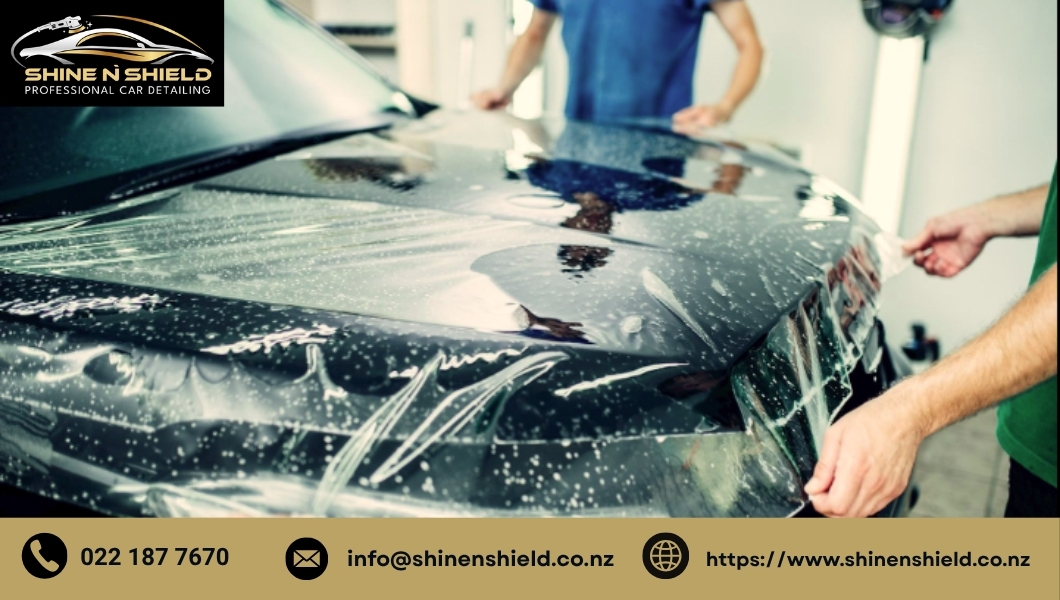
If physical impact protection is your main concern, Paint Protection Film (PPF) is designed for a different purpose.
What Is Graphene Coating?
Graphene coating is a newer coating option that uses graphene or graphene-related materials in its formulation.
You may have seen claims that graphene coatings are stronger, slicker or more advanced than ceramic coatings. Some products may offer these characteristics, but it is important not to assume that every graphene coating performs in exactly the same way.
Different products have different formulations.
That means the word “graphene” on the label does not tell you everything you need to know.
The product being used, preparation of the paint and application process all matter.
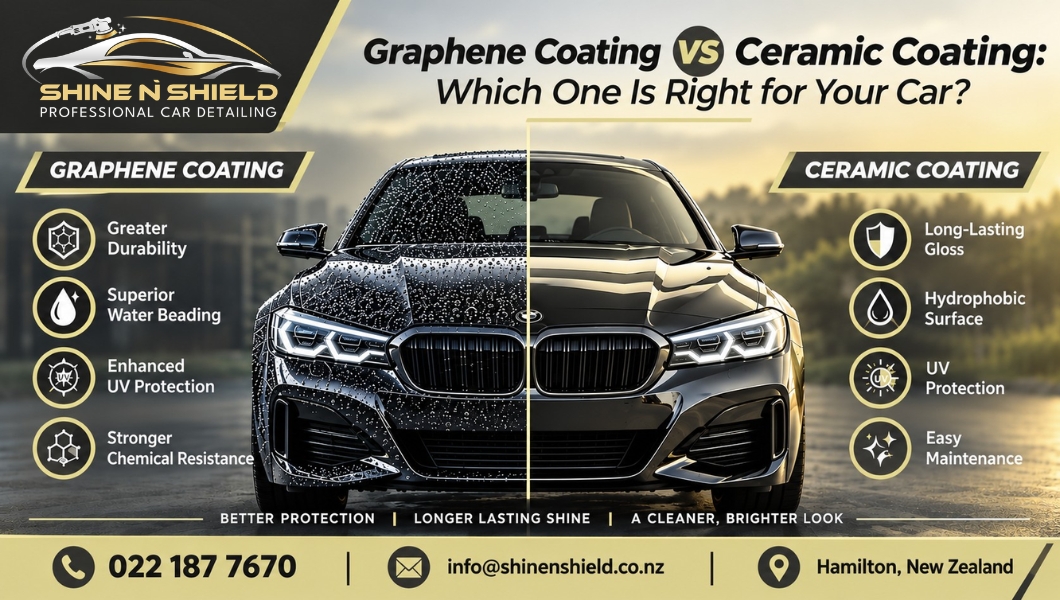
Graphene Coating vs Ceramic Coating: What Is the Difference?
For a car owner, the difference can be kept fairly simple.
| Graphene Coating | Ceramic Coating |
|---|---|
| Uses graphene or graphene-related materials | Commonly uses ceramic/SiO₂-based chemistry |
| Can provide water-repellent properties | Known for hydrophobic properties |
| Can improve gloss and surface feel | Can improve gloss and surface appearance |
| Can make routine cleaning easier | Can make routine cleaning easier |
| Does not make paint scratch-proof | Does not make paint scratch-proof |
| Performance depends on the specific product | Performance depends on the specific product |
So, if you are comparing the two, do not focus only on which name sounds more advanced.
Look at the actual coating and how it will be applied to your car.
Which One Protects Paint Better?
This is probably the first thing most owners want to know.
Both coatings are designed to add a protective layer over the paint. They can help reduce the effect of everyday environmental contamination and make the surface easier to maintain.
But neither coating is a magic shield.
If a stone hits your bonnet at speed, a coating is not going to guarantee that there will be no damage.
The same applies to deep scratches.
If your main concern is chips and physical impact, you may need a different type of protection.
What If Your Paint Already Looks Dull?
This is where preparation becomes really important.
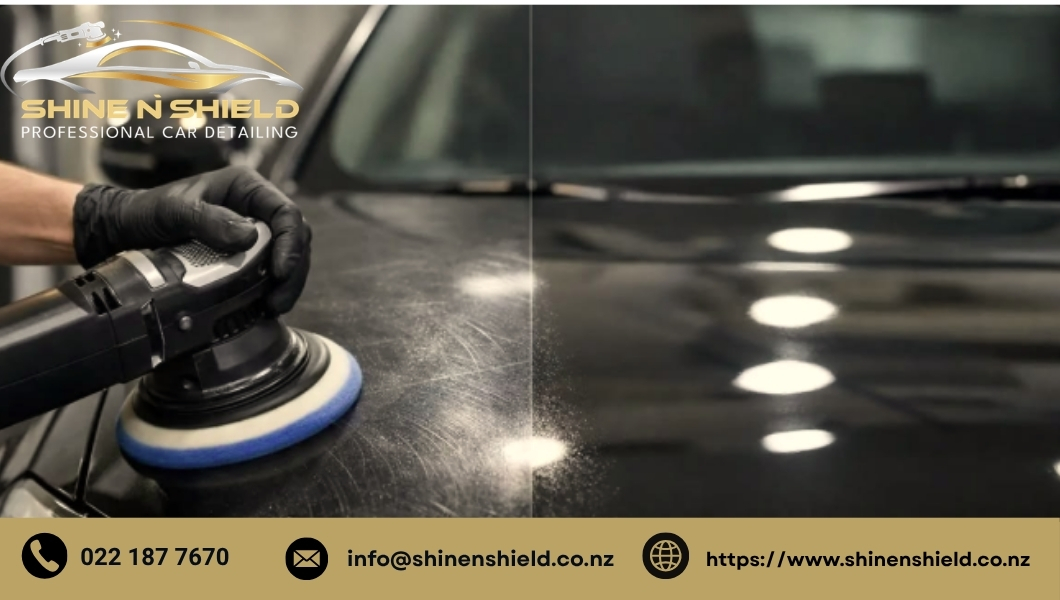
A coating will protect the surface underneath it. It will not hide every swirl mark, scratch or patch of oxidation.
Take a black car with lots of fine swirl marks. Applying a coating will not suddenly make those marks disappear.
That is why some vehicles benefit from paint correction before coating.
You can learn more about this through Paint Correction.
The idea is simple: get the paint looking as good as reasonably possible first, then protect it.
What Is Better for a Daily Driver?
Think about your normal week.
You might drive to work, leave the car outside, deal with rain and road grime, and then find yourself putting off the next wash because cleaning the car takes too long.
A good coating can make that routine easier.
Both ceramic and graphene coatings can provide water-repellent properties and make it easier to clean contaminants from the surface when properly maintained.
But you still need to wash the car.
A coating reduces some of the hassle. It does not replace regular car care.
For Hamilton drivers, your parking situation and driving habits are worth considering before choosing a coating.
Does a Coating Make the Car More Glossy?
It can.
A properly prepared and coated vehicle can have a cleaner, deeper-looking finish. However, the final appearance depends heavily on the condition of the paint underneath.
If the paint is dull, heavily marked or contaminated, polishing or correction may be needed first.
If you are also interested in improving the appearance of metal surfaces, you can explore Paint Polishing Hamilton.
Good preparation often makes a bigger visual difference than people expect.
Is Ceramic Coating Still a Good Option?
Yes.
Ceramic coating remains a popular choice for people who want a combination of gloss, water repellency and easier maintenance.
If you are looking at Ceramic coating Hamilton, ask what product will actually be used and what preparation is included.
That is much more useful than simply asking whether the coating is “ceramic.”
What Should You Ask Before Getting a Coating?
Before making a decision, ask a few straightforward questions:
What coating product are you using?
Knowing the actual product gives you more useful information than just the word graphene or ceramic.
Does my paint need correction?
Older or marked paint may need additional preparation.
How do I maintain the coating?
You should know what washing and care the coating requires.
What does the coating protect against?
This helps you understand its limitations as well as its benefits.
Graphene or Ceramic: Which Should You Choose?
There is no single option that suits every car.
If you are searching for Graphene Coating Hamilton, start by looking at your vehicle rather than simply choosing the newest-sounding technology.
Consider the condition of the paint, how often you drive, where the car is parked and how much time you want to spend maintaining it.
For one vehicle, ceramic coating may make sense. Another may suit a graphene-based product. A third might benefit more from paint correction or PPF first.
The right choice is really about matching the protection to the car.
FAQs
Is graphene coating better than ceramic coating?
Not automatically. Both can provide useful paint protection. The actual product, preparation and application all affect the result.
Does graphene coating prevent scratches?
No. It does not make the paint scratch-proof. It can add surface protection, but deeper scratches and physical damage can still happen.
Can an older car have ceramic coating?
Yes. The paint should be properly cleaned and prepared first. Depending on its condition, paint correction may also be recommended.
Do I need paint correction before coating?
Not necessarily. It depends on the condition of the paint and the finish you want. Visible swirl marks or oxidation may be worth correcting beforehand.
Do graphene and ceramic coatings need maintenance?
Yes. You still need to wash your car regularly. A coating can make maintenance easier, but it does not eliminate the need for proper car care.
Final Thoughts
Choosing between graphene and ceramic coating does not need to be complicated.
Start with your car, its current paint condition and the way you use it. Then look at the actual coating, preparation process and maintenance requirements.
At Shine N’ Shield, the focus should be on finding an approach that suits the vehicle rather than simply choosing a coating because it has a particular name.